































Contact
Book with confidence through a trusted local platform in Alanya. Easy contact, secure payment and direct support.
COMPANY
FOLLOW US
SECURE PAYMENT METHODS


Pay online or pay on the tour.

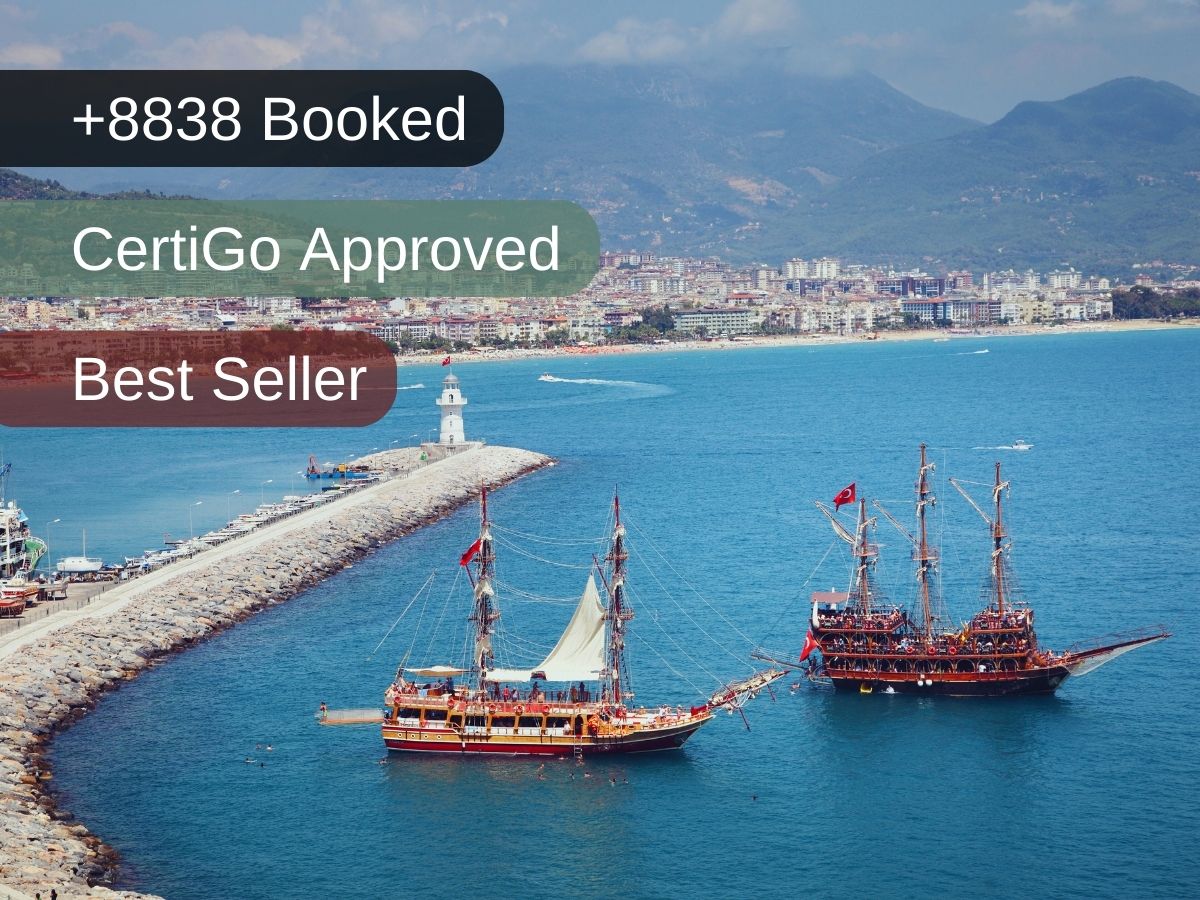
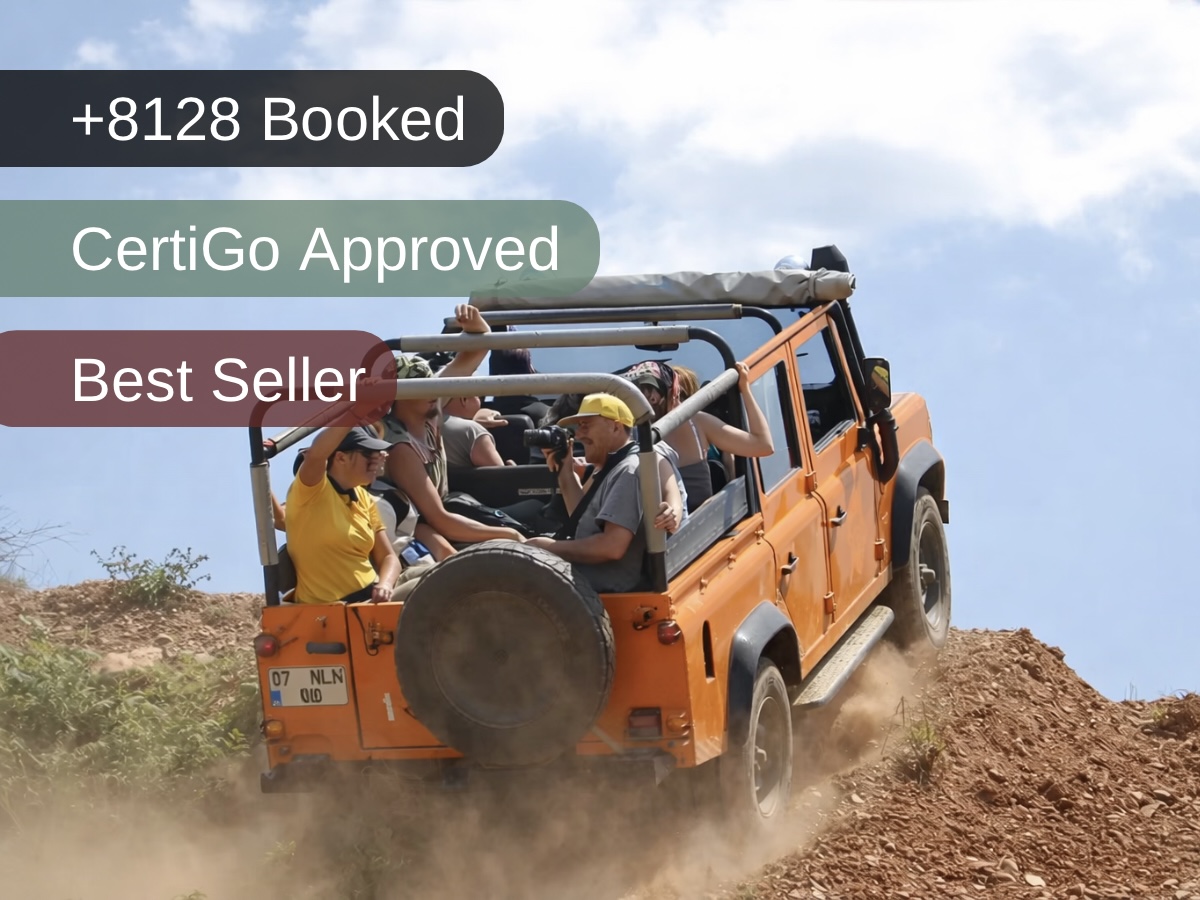
Payallar is a growing holiday area near Alanya where visitors stay close to the sea while still having quick access to popular excursions. Many guests here enjoy joining boat trips, jeep safaris or canyon tours during their stay. Through CertiGo, travelers in Payallar can easily discover tested tours and reliable local places around the area.
 |
 |
 |
| Book online | WhatsApp booking | Pay Later |
| Fast & simple Instant confirmation |
Chat with local expert anytime |
Pay on tour or online |
Discover all curated experiences in Alanya including jeep safaris, nature trips, shopping visits, restaurants and local activities.
View All Alanya ExperiencesDiscover hand-picked shopping spots in Alanya with complimentary pickup from Payallar. Browse gold & jewelry stores, designer outlets and local boutiques freely, with no obligation to buy and full CertiGo assistance throughout your visit.
Explore Shopping from PayallarExplore hand-picked restaurants with free pickup and drop-off from Payallar. Dine comfortably, spend time in the city center or marina afterwards, and pay only for what you eat with CertiGo handling all coordination.
View Restaurants from PayallarPayallar is a developing coastal area located west of Alanya, between Konaklı and Türkler. It offers easy access to main roads and convenient pickup points for tours and activities.
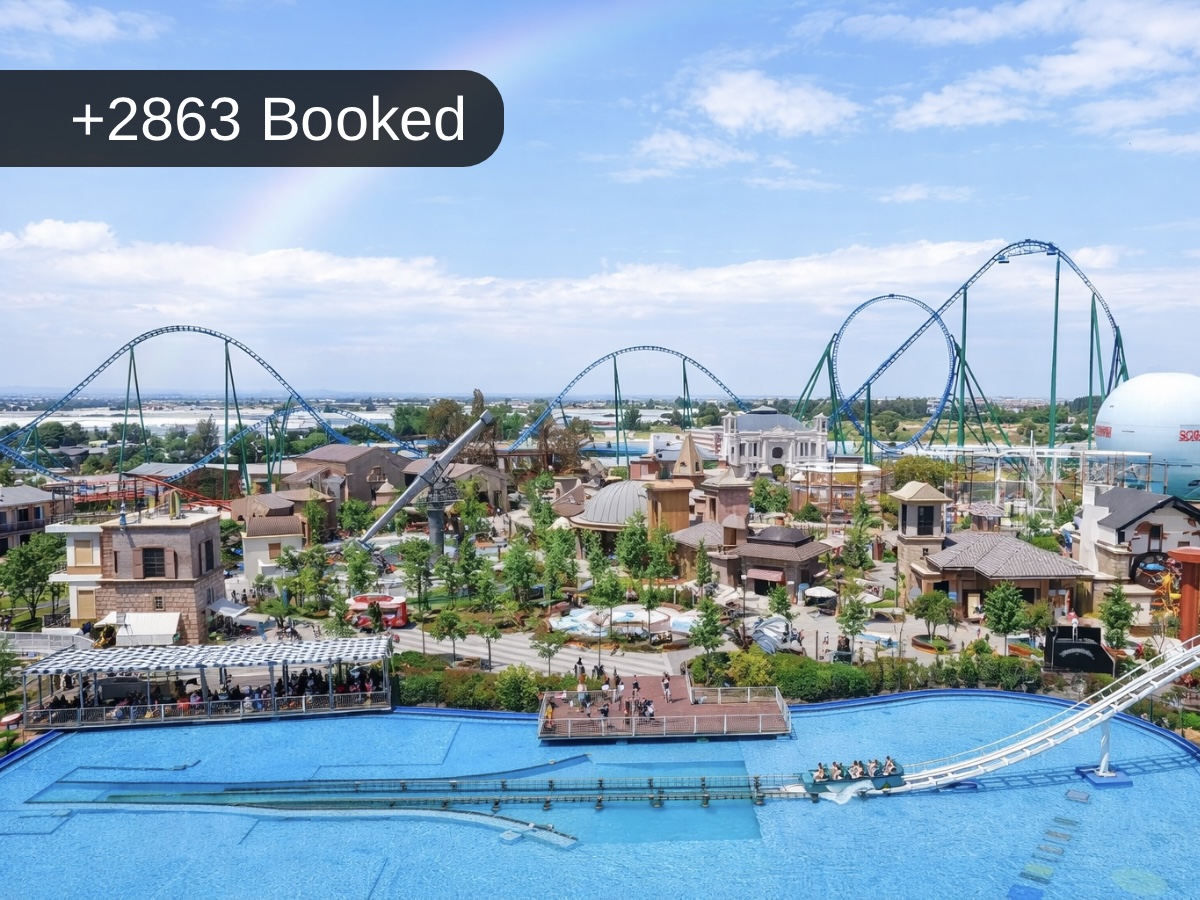
Popular activities from Payallar include boat tours, jeep safari adventures, family-friendly theme parks, shopping experiences and evening restaurant visits organized from Alanya.
Yes. Most tours, activities and selected restaurants provide free hotel pickup and return from Payallar, making it easy to join without extra transport planning.
Yes. Payallar is popular with families and long-stay guests thanks to its quieter environment and easy access to Alanya experiences with organized transfers.
Payallar is approximately 15–20 minutes from Alanya city center, and many tours include free return transfers after activities or dinners.
View all tours available for Payallar guests
Browse family tours from Payallar
See shopping options for Payallar visitors
Trusted dental clinics serving Payallar area
Recommended restaurants for Payallar guests
Payallar is one of the most underestimated areas on the western side of Alanya. At first glance, many travelers see it only as a passing point between Konaklı, Türkler and Avsallar. But that reading is too shallow. Payallar is becoming one of the most strategically important west-coast belts because it combines three things at once: a growing hotel corridor, a large-scale seafront recreation investment, and a deeper inland residential structure that is more settled than many visitors realize. :contentReference[oaicite:0]{index=0}
This is why Payallar is worth a serious authority page. It is not just a “hotel spillover” area from neighboring districts. Municipal planning and infrastructure updates show a place that has been gaining stronger roads, new parks, improved seafront usability and more formal urban structure in recent years. In other words, Payallar is not frozen. It is actively being shaped into a more complete west Alanya zone. :contentReference[oaicite:1]{index=1}
Payallar works best when you understand its two-layer identity. The coast is increasingly tourism-shaped, with hotels and seafront recreation getting stronger. But behind that, Payallar still has the feel of a real west Alanya neighborhood with local roads, older settlement patterns and a quieter daily rhythm than pure resort-only zones.
One of the strongest clues about Payallar’s importance is administrative and service geography. In Alanya Municipality’s own strategic structure, Payallar was treated as the service center of the “Batı-2” western subregion, covering not only Payallar itself but also nearby western neighborhoods such as Türkler and Konaklı. That is a major signal. Municipal systems usually do not assign this kind of role to places seen as secondary. :contentReference[oaicite:2]{index=2}
This also explains why Payallar repeatedly appears in municipal service, road, pavement and neighborhood investment news. It is not being treated like a forgotten edge district. It is being handled like an operational western anchor point. That makes it very different from the way casual tourists often imagine it. :contentReference[oaicite:3]{index=3}
Payallar does not feel like central Alanya, and it does not feel exactly like Konaklı either. Konaklı is more openly hotel-and-shopping oriented. Payallar feels more transitional. Some parts are strongly tourism-facing, especially around newer or larger hotels, but other parts still feel like an older, lived district with inland movement, neighborhood roads and a more local-scale pattern behind the coast. Municipal road reports even describe parts of Payallar as an older, densely settled area that has been gaining more city-like transport structure over time. :contentReference[oaicite:4]{index=4}
That dual character makes the area commercially interesting. Guests can use Payallar as a hotel base, but the district is not as one-dimensional as a pure resort strip. There is enough local structure around it to give the area weight beyond just hotel entrances and transfer stops. :contentReference[oaicite:5]{index=5}
One of the biggest recent changes in Payallar is not a single hotel, but the strengthening of the coastal public realm itself. Alanya Municipality’s seafront project linking Türkler, Payallar and Konaklı created a 4 km recreation belt with walking routes, green sections, sitting areas, sports areas, viewing spaces, children’s areas, cafeterias and parking capacity. That matters a lot for authority. It means Payallar’s coast should no longer be described only through private hotel logic. The public seafront layer became meaningfully stronger. :contentReference[oaicite:6]{index=6}
At the same time, Payallar is still a place where many visitors experience the sea through hotels rather than through a famous independent public beach identity. Booking and Tripadvisor hotel pages repeatedly frame Payallar around beachfront or beach-hotel stays, which shows how the district is consumed by travelers: through hotel-managed sea access, pools, family facilities and organized all-inclusive environments. :contentReference[oaicite:7]{index=7}
Payallar can absolutely work for beach holidays, but the stronger and more accurate angle is not “best raw natural beach in Alanya.” The stronger angle is comfort, family resort use, seafront convenience and the fact that the coastline is increasingly easier to enjoy thanks to both hotel management and public recreation investment. For users deciding where to stay, that is the truthful positioning. :contentReference[oaicite:8]{index=8}
| Payallar Feature | What It Means | Best For | Less Ideal For |
|---|---|---|---|
| Growing seafront recreation belt | The coastline is stronger and more usable than before | Families, walkers, mixed hotel + outside time | Travelers expecting a famous standalone beach brand |
| Hotel-shaped beach experience | Sea quality is often felt through the property you choose | Resort guests, all-inclusive stays | Pure public-beach purists |
| West-side service center role | Payallar has wider regional importance, not just local importance | Travelers wanting a practical base | Visitors wanting historic old-town atmosphere |
| Older inland settlement behind tourism layer | The district has more depth than a simple hotel strip | Guests who like a calmer local backdrop | People wanting only polished resort visuals |
A big part of Payallar’s story is transport improvement. Municipal updates from 2022 to 2025 repeatedly show widening, asphalt renewal and transit-link work in and around the district, including Cumhuriyet Caddesi, the older “Çamur Yol” artery and the Payallar–Emişbeleni direction. This is not just boring infrastructure detail. In tourism districts, roads decide whether the area feels temporary or whether it starts behaving like a real urban zone. Payallar is clearly moving toward the second category. :contentReference[oaicite:9]{index=9}
That is also why Payallar increasingly works for both tourists and longer-term users. Better roads mean easier hotel transfers, easier movement to nearby centers such as Konaklı and Türkler, and a stronger local feeling of continuity instead of fragmentation. :contentReference[oaicite:10]{index=10}
One reason Payallar should not be reduced to hotels is that municipal investment has also targeted family-scale daily life. The new Hapıllar Children’s Park and the planned health facility / 112 emergency station show an area being built not just for short-term stays, but for regular life and service delivery. That helps explain why the district feels more settled than a pure tourism corridor. :contentReference[oaicite:11]{index=11}
For visitors, this matters indirectly. Places with parks, service buildings and neighborhood roads usually feel more stable than places designed only around seasonal tourism. Even when tourists do not use those services directly, they feel the difference in how the district behaves. :contentReference[oaicite:12]{index=12}
Payallar’s public travel identity is strongly hotel-led. Among the names that repeatedly surface on major accommodation and review platforms are Kahya Resort Aqua & Spa, Eftalia Blue, Kaia Coracesium, Club Sea Time and Holiday Line Hotel. Booking also shows Payallar and its immediate surroundings being searched mainly through the lens of beach hotels and family resort stays, which reinforces the district’s tourism profile. :contentReference[oaicite:13]{index=13}
That does not mean every stay in Payallar is luxury-forward. It means the market identity is clear: people search Payallar primarily for resort convenience, beachfront facilities, pools, family amenities and value-oriented all-inclusive or beach-hotel experiences. For CertiGo, that clarity is useful because it gives the page a very defined commercial angle. :contentReference[oaicite:14]{index=14}
Compared with Konaklı, Payallar feels a little less openly retail-and-hotel polished, but also less saturated. Compared with Türkler, it feels less like a pure family-resort cluster and a bit more like a district with local backbone behind the coast. Compared with Avsallar, it is weaker as a “best natural beach” narrative, but stronger as a transition zone where infrastructure, coastal recreation and hotel growth are all actively evolving. These are partly interpretive comparisons, but they are grounded in the different municipal investment patterns and tourism profiles visible across the west Alanya corridor. :contentReference[oaicite:15]{index=15}
If you stay in Payallar, the smartest expectation is this: you are choosing a west Alanya base where the hotel experience matters, the coast is more usable than before, and the district has enough local structure to avoid feeling fake. You are not choosing an old soul Mediterranean town. You are also not choosing a completely isolated hotel-only island. Payallar sits in the middle, and that is exactly what makes it interesting. :contentReference[oaicite:16]{index=16}
Payallar guests usually need local filtering, not generic brochure language. They want to know whether the coast is actually usable, which hotel zone is stronger, whether the area feels dead outside the property, and what nearby places are worth leaving the hotel for. That is exactly where CertiGo can be most useful.
Payallar is a strong match for travelers who want a west-side Alanya stay with resort convenience, improving coastal public space and a calmer environment than the busiest tourist centers. It works well for families, hotel-first guests, travelers who like to combine pool-and-sea days with easy walks, and visitors who do not need a nightlife-heavy center every evening. :contentReference[oaicite:17]{index=17}
It is less ideal for travelers who want a powerful old-town identity, a highly famous public beach brand, or a district whose charm comes mainly from historic streets and compact walkable town energy. Payallar is stronger as an evolving west-coast base than as a postcard district. :contentReference[oaicite:18]{index=18}
Thoughtful thoughts to your inbox
Free Cancellation: Most tours offer free cancellation with a full refund up to 24 hours before the activity start time.
Secure Booking: Reserve online or pay on the tour. All prices are transparent and confirmed before the activity.
Hotel Pick-Up: Many tours include free hotel pick-up across Alanya districts including Mahmutlar, Oba, Konaklı, Avsallar and surrounding areas.
Local Platform: CertiGo connects travelers with verified local operators and trusted businesses in Alanya.
Trusted by Travelers: More than 50,000 visitors have used CertiGo to explore tours and experiences in Alanya since 2023.
Special Circumstances: In case of medical emergencies, hospital reports or unexpected situations, please contact us as soon as possible. Our team will review the case and assist with possible refunds or changes.
Operator Responsibility: Tours and activities are operated by independent local providers responsible for safety, equipment and service delivery.
© 2023–2026 CertiGo. All rights reserved.
